1. Look at what you can see from the ground
Dented gutters, downspouts and gutter guards. Dings in the soft metal of AC fins, mailboxes, window screens and painted decks. Shredded leaves and stripped twigs. Chipped paint on siding on the windward side. If the metal around the house is dented, the roof was hit; if nothing on the ground shows a mark, the roof probably didn't take much. Don't go up.
2. Photograph and note the date
Photos of the ground-level damage with the date, and a screenshot of the weather report or the local news for your ZIP. The date of loss is what the claim is filed under, and carriers verify it against hail maps.
3. Get a real inspection before you file
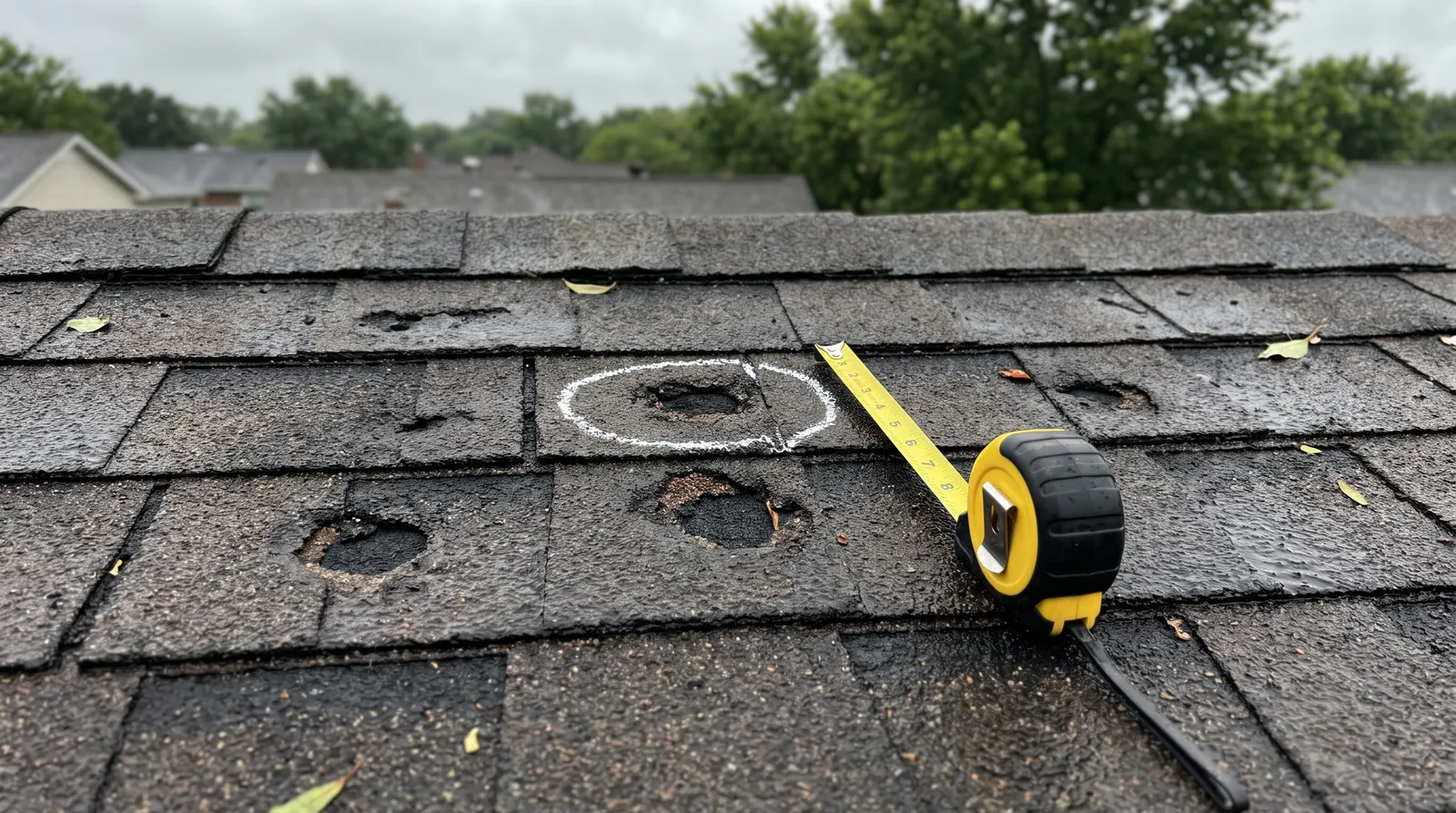
Hail damage on shingles is a bruise — a soft, dark spot where the granules were knocked off and the mat is fractured — not a hole. An inspector chalks a 10-by-10-foot test square on each slope and counts hits; most carriers consider eight or more per square on a slope as replaceable. The inspection tells you whether the damage is there, which slopes have it, and whether it's worth a claim against your deductible. We do this free, with photos, and we'll tell you when the answer is no.
4. Understand the deductible before you file
Many Alabama policies now carry a wind/hail deductible of 1 to 2 percent of the dwelling coverage — $3,500 to $7,000 on a $350,000 house. On a one-slope repair the claim may pay you nothing; on a full replacement it pays most of it. Also check for an ACV roof endorsement, which pays only the depreciated value on older roofs. Your declarations page has both.
5. File, and be on the roof with the adjuster
Call the claims line or use the app; give the date of loss and describe the damage. The carrier sends an adjuster in one to three weeks. Have your roofer there — they'll walk the test squares with the adjuster so bruising, creases, and collateral damage (vents, gutters, skylights, screens) get counted, and they'll supplement the scope for code items the first estimate misses.
6. Watch for the trucks
After every hailstorm in Madison County, out-of-state crews arrive with door-hangers and yard signs, 'free inspections,' and offers to 'handle your deductible.' Paying or rebating a deductible is illegal in Alabama. Ask any roofer for a physical local address, an Alabama HBLB roofer license, a certificate of insurance, and references from before the storm. Don't sign an assignment of benefits or a contingency contract you don't understand, and don't let anyone on your roof who wasn't invited — some create the damage they then find.
7. What insurance covers
Hail damage to the roof, gutters, vents, skylights and siding is covered under a standard Alabama policy, subject to the deductible. Cosmetic-only dents on metal roofs may be excluded by endorsement — check. Rebuilding to current code (ridge vent, ice-and-water, drip edge) is often covered under ordinance-or-law. Age and wear are not.
Common questions
My neighbors are all getting roofs. Should I file too?
Get the inspection first. Same-age roofs on the same street often have the same damage, and often they don't — hail is inconsistent across a few hundred feet. We file when the damage is there.
How long do I have to file?
Check your policy — many Alabama policies allow a year from the date of loss, some less. Hail bruising leaks three to five years later, so get the inspection now even if you decide to wait.
The adjuster said the damage is 'cosmetic.' Now what?
Ask for a re-inspection with your roofer present and photos of the fractured mat under the bruises. Bruising with mat damage isn't cosmetic; it's a roof that will leak.
What about my metal roof?
Dents on standing seam are usually cosmetic and many policies exclude them by endorsement. Dents that crack the finish or open a seam are functional damage and covered.
Do you knock on doors after storms?
No. If someone tells you your roof is damaged from the sidewalk, ask for photos from the roof.
Related: Storm & hail damage · Insurance claims · Roof inspection · Claims guide